NACTV through the Local Journalism Initiative project has now expanded into covering and providing journalist insight not only to current local governments but also the Electoral Forums in the Town of Neepawa, organized by the local Chamber of Commerce. This has not only provided an avenue for the residents to be better informed about the candidates, their platforms and plans, but most importantly, it has provided an avenue for people to raise issues or concerns affecting them and engage each candidate to address their issues and concerns.
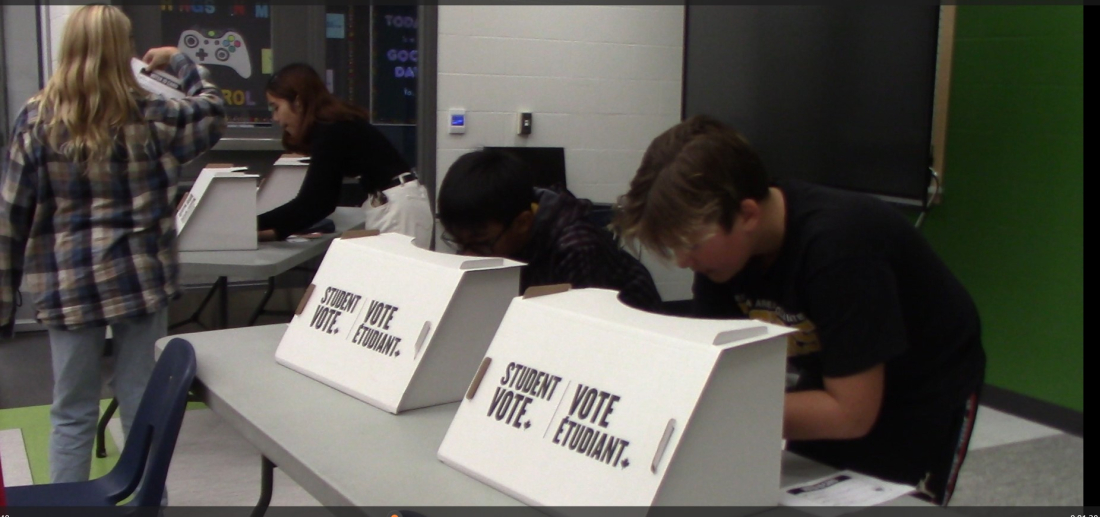
However, the election is not only important to those who can vote but also to a certain percentage of the population who can’t yet vote but whose lives will also be affected. This is the younger people below 18 years old who will be our future voters. At the school level, Canada has the Student Vote program which aims to empower students to experience the voting process firsthand and cast ballots for the official candidates running in the election.
Thanks to LJI coverage of the Election Forum, Neepawa Area Schools can now have an easy access to the program and the students are able to watch the Forum before their mock voting day. During their mock voting, NACTV had a chance to talk to some of the students who shared their views about the importance of voting and what to look for in a candidate. One of the students stressed the importance of voting for the right person based on your own opinion and not what is popular. As this young student mentioned “There’s other people’s opinion but you like this person because it’s your opinion. Doesn’t mean that it will make you happy if you voted for them. It’s like peer pressure when everyone’s just gonna tell you to vote for anyone.”
When asked about what they think after watching the Political Debate, the students discussed some of the priorities of the political parties such as healthcare, daycares, better roads and agriculture and mentioned the importance of consulting the people first before they make their plans.
Raising the issues on the table and being able to engage the residents, especially the younger population, is a crucial role for us in the media sector.
Ajouter un commentaire
A propos l’IJL
LJI Impact is the section of commediaportal.ca where the journalists and their organizations participating in CACTUS' Local Journalism Initiative can share their greatest successes.
Through the written stories, photos and videos you see in the LJI Impact section, you'll be able to read first hand accounts about how the presence of a community journalist is making a difference in communities across Canada through the Local Journalism Initiative and the Community Media Portal.
The Community Media Portal is a gateway to the audio-visual media created by community media centres across Canada. These include traditional community TV and radio stations, as well as online and new media production centres.
Community media are not-for-profit production hubs owned and operated by the communities they serve, established both to provide local content and reflection for their communities, as well as media training and access for ordinary citizens to the latest tools of media production, whether traditional TV and radio, social and online media, virtual reality, augmented reality or video games.
The Community Media Portal has been funded by the Local Journalism Initiative (the LJI) of the Department of Canadian Heritage, and administered by the Canadian Association of Community Television Users and Stations (CACTUS) in association with the Fédération des télévisions communautaires autonomes du Québec (the Fédération). Under the LJI, over 100 journalists have been placed in underserved communities and asked to produce civic content that underpins Canadian democratic life.