

- Start playing the video
- Click CC at bottom right
- Click the gear icon to its right
- Click Subtitles/CC
- Click Auto-translate
- Select language you want
St. James Town TV News: Reimagining Public and Open Space in St. James Town
By Dimitrije Martinovic
(Dimitrije is staff journalist at FOCUS MEDIA ARTS CENTRE)
St. James Town, which is bounded by Bloor Street East to the North, Wellesley Street to the South, Jarvis Street to the West, and Parliament to the Street east; is considered to be one of North Americas most densely populated neighbourhoods, and research by the Wellesley Institute has identified that St. James Town suffers from:
“overcrowding, lack of green and public spaces, poor building and neighbourhood maintenance, and a general lack of resources for serving the large and diverse population.”
There are 19 high-rise apartment buildings ranging in 14 to 32 stories in height, with a population density of 44,321 people per square km (Statistics Canada, 2016 Census of Population. Neighbourhoods data set at: www.toronto.ca/open). Many of the buildings are named after major Canadian cities, The Winnipeg, The Halifax, The Vancouver, The Montreal, The Calgary, The Toronto, The Edmonton, The Victoria, The St. John’s, The Quebec, and the 650 Parliament.
Ironically, in the 1960s when the first buildings were constructed (influenced by French architect Le Corbusier’s “Towers in the Park” concept) the complex was promoted as an idyllic residential location for a swarm of young middle workers who had gravitated to the city to work in the downtown area. Unfortunately, the project became mired in miscalculations form the start. Primary among these was the fact that the transition from high-end dwelling to a populous lower income neighbourhood (mostly comprised of immigrant families) was rapid, and the developers did not foresee the need to include a range of social amenities to support such a large up-take in density. Another problem is that St. James Town is actually made-up of both privately owned buildings and streets, and publicly owned buildings and streets, and the privately owned properties do not necessarily have to adhere to city standards regarding the upkeep of sidewalks or roads - circumnavigating these preconditions has proved to be an on-going challenge.
After many committees, and numerous reports, that date back to the 1980s, the City of Toronto in 2000 approved a Community Action Plan, the aim of which is to revitalize St. James Town through initiatives such as the building of a multi-service community centre, improvements parks, and the maintenance and repair of St. James Town buildings. The St. James Town Connects Framework which is the overarching title for the entire project, “builds on the 1989 Community Improvement Plan (CIP), the St. James Town 2000: A Community Action Plan and the St. James Town Open Space Study (2003)” (City of Toronto).
Among the key areas that have been identified by both the city and resident’s groups as having the most impact, the creation of improved parklands and open spaces. Known as the Open Space and Ontario Street Concept Plan, it will include:
* Wider sidewalks
* Connected and safe pedestrian walkways
* Improving open space to better meet the needs of the local community
* Enhancing the pedestrian experience through the addition of lighting, tree planting and seating
* Reorganizing solid waste and surface parking to achieve mid-block connections
The timing of this Framework provides an opportunity to address community concerns and realize a vision for improved spaces through partnerships and coordination with capital works, redevelopment and alignment with the Council approved Downtown Parks and Public Realm Plan. This implementation framework provides direction to connect St. James Town to the surrounding neighbourhood through improvements to safety, greening and accessibility (St. James Town Connects Framework- St. James Town Public Realm and Open Space Plan - Final Report – January 26, 2018).
Revitalization has become a catch-all term that is being deployed to describe large scale improvements to a neighbourhood– it is however a two-edged sword – and it both gives as it takes away. The gains to the community through revitalization will immediately be obvious, but what will happen to rents as the property value of the neighbourhood goes up and the area once again becomes desirable to upper income professionals and their families?
Add new comment

FOCUS Media Arts Centre (FOCUS) is a not-for-profit organization that was established in 1990 to counter negative media stereotypes of low income communities and provide relevant information to residents living in the Regent Park area and surrounding communities.
We seek to empower marginalized individuals and under represented communities to have a voice, through the use of professional training, mentorships and participatory based media practices that enable the sharing of stories, experiences and perspectives on relevant matters and issues. In brief our mandate is to empower marginalized individuals and under-serviced communities to have a voice and tell their own stories.
Recent Media

Regent Park Marks 34th Annual Sunday in the Park Celebration

Regent Park Town Hall: Councillor Chris Moise Updates Residents on Key Issues
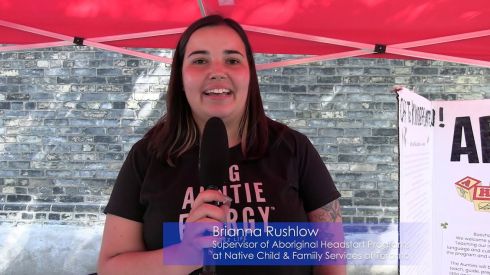
Building Healing Pathways for Families: Inside Native Child’s Work in Toronto
We encourage comments which further the dialogue about the stories we post. Comments will be moderated and posted if they follow these guidelines:
The Community Media Portal reserves the right to reject any comments which do not adhere to these minimum standards.