


- Start playing the video
- Click CC at bottom right
- Click the gear icon to its right
- Click Subtitles/CC
- Click Auto-translate
- Select language you want
St. Jamestown TV News: How Effective is Virtual Learning?
By Nea Maaty
(Nea is a community journalist with the FOCUS Media Arts Centre)
For almost two years, Toronto and many parts of Ontario has been dealing with the lockdown. Education wise, students are either home-schooling, involved in virtual schooling or some form of mixture of the two. One thing we do know is that students are not having the experiences they used to have as part of a regular school day.
As we move from the vaccine era and are preparing for a return to physical schooling next year, the question that is raised is how much of virtual schooling will be here to stay?
Will cost cutting governments use the covid experiment of the past two years to eliminate teachers and increase class sizes by putting more of the curriculum on-line? To answer this question, many are now trying to assess the effectiveness of virtual education.
Rox Hayward, a teacher at Rose Avenue Public School in the community of St. James Town, Toronto, discusses the positives and negatives of virtual education this year. Hayward teaches grades 3,5,6,7 with the Toronto Public School Board. Hayward is a supporter of on-line education. “My students and I, have fun every day.” say’s Hayward.
For Hayward the teaching experience this year has been very positive. Attendance in her virtual classroom was always at 100%. “The students were excited to learn and to give more to the educational experience.” say’s Hayward. Even so Hayward admits to barriers. “One of the teaching duties this year has been making sure that the families of students - who are struggling financially because of the lockdown - know how and where to access community and internet resources.”
Hayward believes that teachers should advocate on behalf of their students and go to the principals at their school to make sure that the students they serve have the resources they need to access on-line learning.
Although Hayward supports on-line learning she admits that many of her peers who have been trained in traditional education methods may not be comfortable with the technology or lack the skills to deliver on-line schooling effectively.
Hayward feels that on-line learning is an opportunity to expand student learning experiences far beyond the classroom. Hayward points to her own experiences developing an interactive on-line lesson about Thornton and Lucie Blackburn, a Black couple that settled in area after escaping slavery in United States. The Blackburn’s created Toronto’s first taxicab, which was named, “The City”. The students get to experience what Toronto was like in the 1800’s and navigate the world of the Blackburn’s.
Not everyone is enamoured with on-line education. I talked to parents and students about on-line learning. One parent I talked to expressed how difficult it was to have the children all day at home working or playing on the computer. “I’m worried about their education level.
Some students expressed some other difficulties like issues with connections. “Sometimes I cannot hear properly what the teacher says”. Other students liked the freedom of schedule in the first months of the first semester but now it’s becoming tough with long hours on the screen and the lack of social interaction.
Whether you like virtual education or prefer in-person classrooms, it will be interesting to see how much on-line education will be integrated into the public education curriculum in the years that follow the pandemic.
Add new comment

FOCUS Media Arts Centre (FOCUS) is a not-for-profit organization that was established in 1990 to counter negative media stereotypes of low income communities and provide relevant information to residents living in the Regent Park area and surrounding communities.
We seek to empower marginalized individuals and under represented communities to have a voice, through the use of professional training, mentorships and participatory based media practices that enable the sharing of stories, experiences and perspectives on relevant matters and issues. In brief our mandate is to empower marginalized individuals and under-serviced communities to have a voice and tell their own stories.
Recent Media

Regent Park Town Hall: Councillor Chris Moise Updates Residents on Key Issues

Regent Park Marks 34th Annual Sunday in the Park Celebration
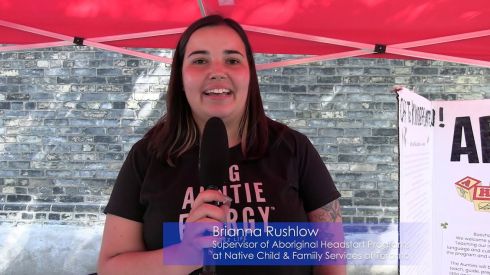
Building Healing Pathways for Families: Inside Native Child’s Work in Toronto





We encourage comments which further the dialogue about the stories we post. Comments will be moderated and posted if they follow these guidelines:
The Community Media Portal reserves the right to reject any comments which do not adhere to these minimum standards.